A corporate bank account is essential for doing business in the UAE because it enables you to receive customer payments, pay suppliers and employees, and keep business finances separate from personal funds.
To open a corporate bank account, choose an account that suits your business, prepare your company and ownership documents, and apply through the bank’s approved channel. The bank will review your application before making a decision. Start by understanding the different account types so you do not choose one that limits the payments your business needs to make.
What types of bank accounts are available?
The main account types are current accounts, savings accounts and fixed deposits. Banks also distinguish between personal accounts, held by individuals, and business or corporate accounts, held for a business. These labels overlap: a business can have a current account and a fixed deposit.
| Account type | What it is used for | What to check |
|---|---|---|
| Current account | Regular payments, transfers and everyday banking. Business versions are used to receive customer payments and pay business expenses. | Whether it supports the cheques, cards, currencies and payment services you need. |
| Savings account | Keeping money aside, with interest or other benefits depending on the product. | Withdrawal rules, eligibility and how any return is calculated. |
| Fixed or term deposit | Setting aside money for an agreed period to earn a return. | The deposit period and what happens if you need the money early. |
| Business or corporate account | Banking for a business rather than the owner’s personal spending. It can include current accounts and deposit products. | Whether the bank accepts your business structure and supports your expected transactions. |
For a company receiving sales payments and paying suppliers, a business current account is usually the starting point. A deposit product serves a different purpose: holding money you do not need for immediate payments.
You can compare these uses in Emirates NBD’s business account overview and savings account overview. ADCB also offers fixed deposits for businesses.
Which account suits your business?
Corporate banking commonly includes business current accounts, call deposit accounts and fixed deposits. Banks may offer different packages for each, with different fees and services.
| Corporate account option | When it is useful | What to consider |
|---|---|---|
| Business current account | Receiving customer payments and paying suppliers, rent and other operating expenses. | Available currencies, cheque facilities, online access and charges. |
| Call deposit account | Holding spare business cash without committing it to a fixed deposit period. | Access to funds, available currencies and the bank’s terms. |
| Fixed deposit | Setting aside business money for an agreed period. | The return, maturity date and early-withdrawal terms. |
A digital account or a start-up package is not necessarily a separate account type. It describes how you use the account or the package of services attached to it. Likewise, a foreign-currency option may be a feature of a current or deposit account.
Check the restrictions before applying. For example, ADCB’s SmartStart Business Account is available in UAE dirhams, or AED, only and does not allow foreign-currency inward or outward payments. That restriction matters if your business pays overseas suppliers in another currency.
Also compare the monthly average balance, meaning the average amount you must keep in the account over the bank’s measurement period. An account with no minimum balance can still have a monthly service fee.
These differences are shown in Emirates NBD’s business accounts and banking packages, and ADCB’s SmartStart account details.
Who can apply?
- Registered UAE businesses can generally apply. You need valid company documents, but a trade licence alone does not guarantee approval. Each bank and account has its own rules.
- Mainland and free-zone businesses should check their eligibility. Confirm that the bank accepts your licence and business structure.
- Small businesses can apply too. Emirates NBD’s online criteria include sole proprietors and companies whose ultimate owners are individuals.
- The bank needs to know who owns or controls the business. This person is called the ultimate beneficial owner. If another company owns your business, the bank needs to trace the ownership back to the individuals behind it. Emirates NBD uses a separate application route for this structure.
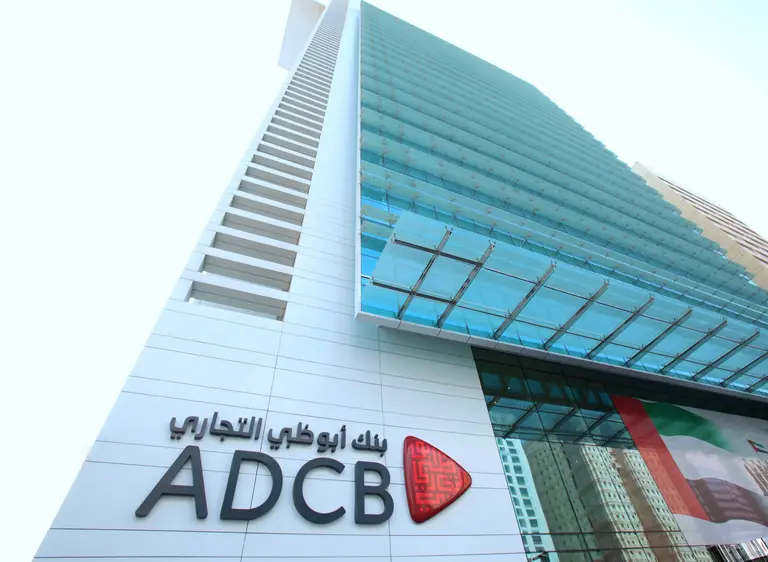
- Residency rules vary. ADCB’s SmartStart account is limited to UAE nationals and residents with a valid visa. Check the chosen bank’s rules for your owners and the people who will operate the account. Do not assume all shareholders must be residents or that all accounts accept non-resident owners.
See Emirates NBD’s published application criteria and ADCB’s SmartStart eligibility requirements.
What documents do you need?
Prepare your business registration documents, ownership information, identification records and evidence of who is allowed to operate the account. Use the chosen bank’s checklist rather than treating any general list as complete.
| Document or information | What to prepare |
|---|---|
| Trade licence and registration | A valid trade or commercial licence, plus incorporation or commercial registration documents as applicable. |
| Company formation documents | The memorandum or articles of association, partnership agreement and relevant amendments, depending on your legal structure. These documents explain how the business is formed and managed. |
| Permission to open and operate the account | A board resolution or other authorization required by the bank, and a power of attorney if applicable. |
| Owner and signatory identification | Valid passports, Emirates IDs and residence visas where the bank requires them. An authorized signatory is someone allowed to sign or approve transactions for the business. |
| Ownership details | Information identifying the ultimate owners, including any companies between them and your business. |
| Business address evidence | Proof of the company address in the form accepted by the bank. |
| Bank statements | Statements for the period and account holder specified by the bank. Emirates NBD lists six months of company statements for an existing company, or partner statements for a new company. |
Requirements for originals, attestation and additional documents vary. For example, ADCB’s SmartStart checklist includes a Chamber of Commerce membership certificate and original identification documents. Ask which items apply to your business before submitting.
It also helps to prepare a short business profile. Explain what you sell, who your customers and suppliers are, which countries you trade with, and the payments you expect. Be ready to explain where the money funding the business comes from. Keep supporting contracts, invoices and financial records available where relevant. This is preparation advice, not a universal mandatory document list.
The core document requirements come from ADCB’s business account FAQs, its SmartStart checklist, and Emirates NBD’s account-opening requirements.
How do you apply and activate the account?
Choose a suitable bank and package, submit a complete application, answer the bank’s questions and activate the account if approved.
- List your banking needs. Decide whether you need local or international transfers, foreign currencies, cheques, cash deposits or access for more than one person.
- Confirm eligibility and costs. Check that the bank accepts your licence, business activity, ownership structure and residency arrangements. Read the current fees, minimum-balance rules and product restrictions.
- Get the bank’s document checklist. Collect the required records and check that names, licence details, ownership information and addresses agree.
- Submit through the official application channel. This may be an online application or a bank-assisted process. Emirates NBD’s online process asks for business, financial and shareholder details, account-management rights, the package and the currency.
- Complete verification and follow-up requests. The bank checks your information and may ask for clarification or further evidence. Keep a list of outstanding questions and respond with clearly labelled documents.
- Activate the account if approved. Follow the bank’s instructions for online banking and any requested services. Check that access and payment-approval rights match the permissions your business agreed.
There is no single opening time that applies to every bank and business. Ask the bank about your application status rather than treating an advertised process as a guaranteed deadline.
Emirates NBD describes its process as application initiation, verification and assessment, then account activation.
After opening, keep your company and financial records current. Banks can request updates later, too. Our guide to preparing for a business bank account review explains how to stay ready.
How can Softledger help with the process?
We help you navigate the application process and prepare your document pack against the bank’s checklist. This includes organizing the company records you provide, preparing relevant financial schedules and identifying missing or inconsistent information. The aim is to reduce avoidable document-related delays, not to promise a faster bank decision.
If you are already stuck at a particular stage, reach out to us. Tell us where the application stands and what the bank has requested. We can help you understand what remains outstanding and prepare a clearer response. You can also read about our banking relationship support.
Account approval and opening time remain the bank’s decision. We cannot guarantee either.
References
Sources checked on 7 November 2026. This guide provides general information, not confirmation that a particular bank will accept your business. Requirements and fees can change. Confirm the latest checklist and terms directly with your chosen bank.
- Emirates NBD: Business accounts. Current accounts, fixed deposits, call deposits and available features.
- Emirates NBD: Savings accounts. Personal savings products and their differing features.
- Emirates NBD: Open a business bank account online. Eligibility, ownership structures, documents, packages and application stages.
- ADCB: Business account FAQs. Company documents, address evidence and account-operation requirements.
- ADCB: SmartStart Business Account. Product-specific eligibility, documents and currency restrictions.
- ADCB: Business fixed deposits. Deposit currencies, periods and product options.